Happy 26th Amendment Day!
55 years ago today, what once seemed impossible, suddenly became inevitable. As we reflect on the 250th anniversary of the nation, we must also honor the role of youth as constitutional architects.

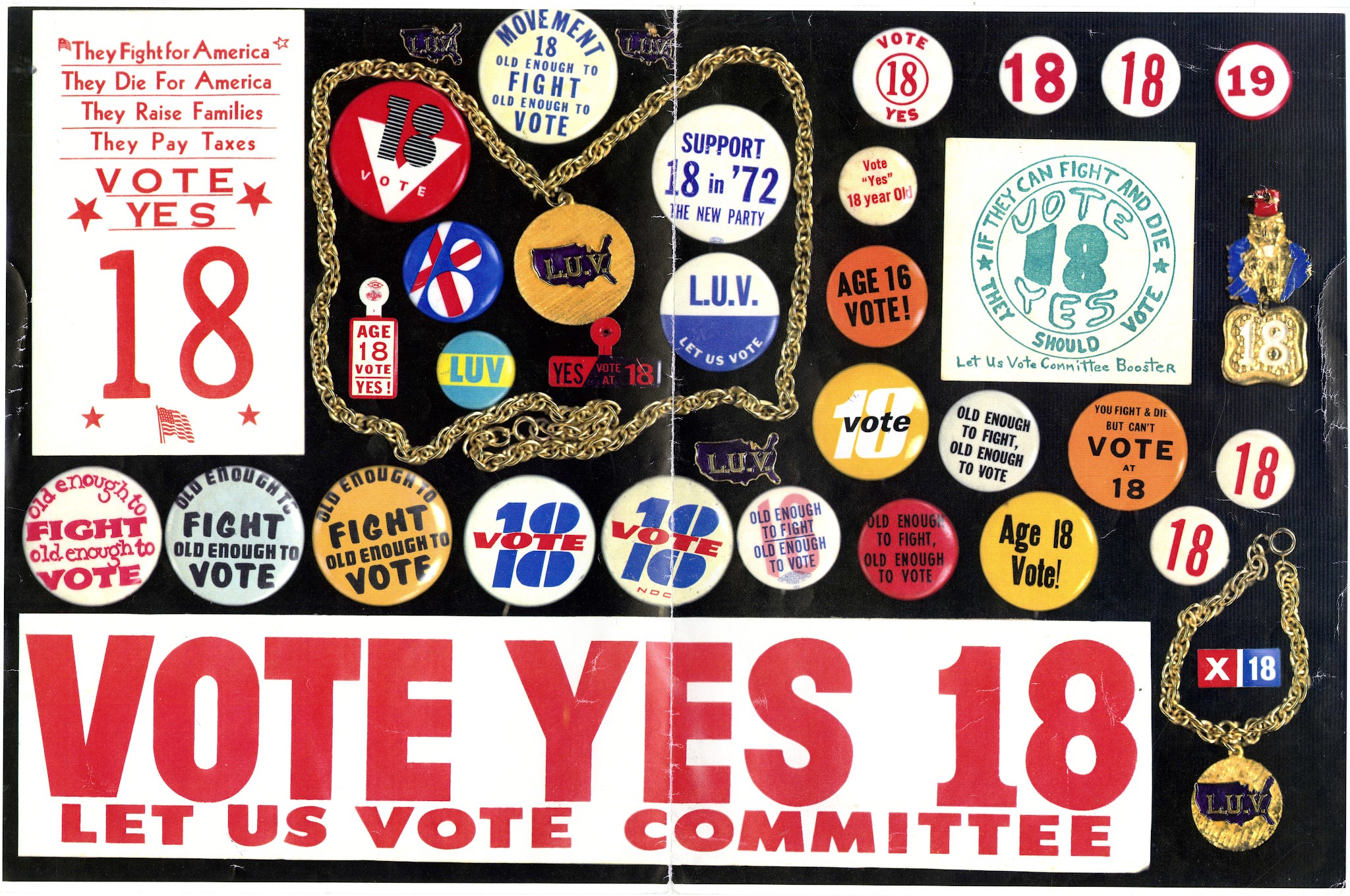
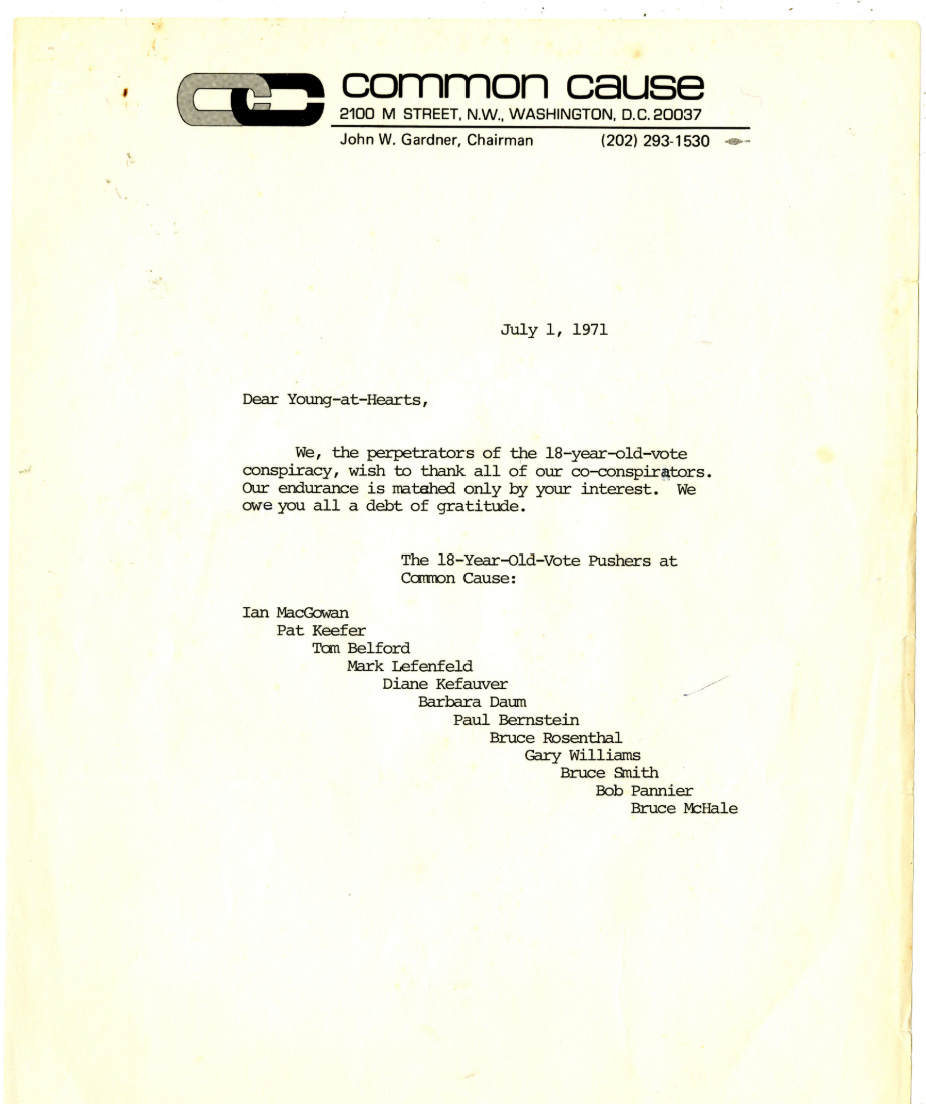
Fifty-five years ago today, the nation gathered, across partisan lines, with the support of a youth-lead ideologically diverse coalition, to accomplish the seemingly impossible: ratify an amendment to the United States Constitution.
Despite being introduced to Congress over 150 times in a 30-year period, public favor for the measure gained the majority and a tipping point was suddenly reached. It became so popular, states were suddenly clamoring at midnight to be among the requisite 38 states for ratification. In doing so, 11 million new voters entered the franchise.
Although it is the most recent voting rights amendment to be ratified – and the quickest to be ratified in U.S. history – few today even know about this constitutional right.
The 26th Amendment didn’t only lower the voting age. It barred age discrimination in elections.
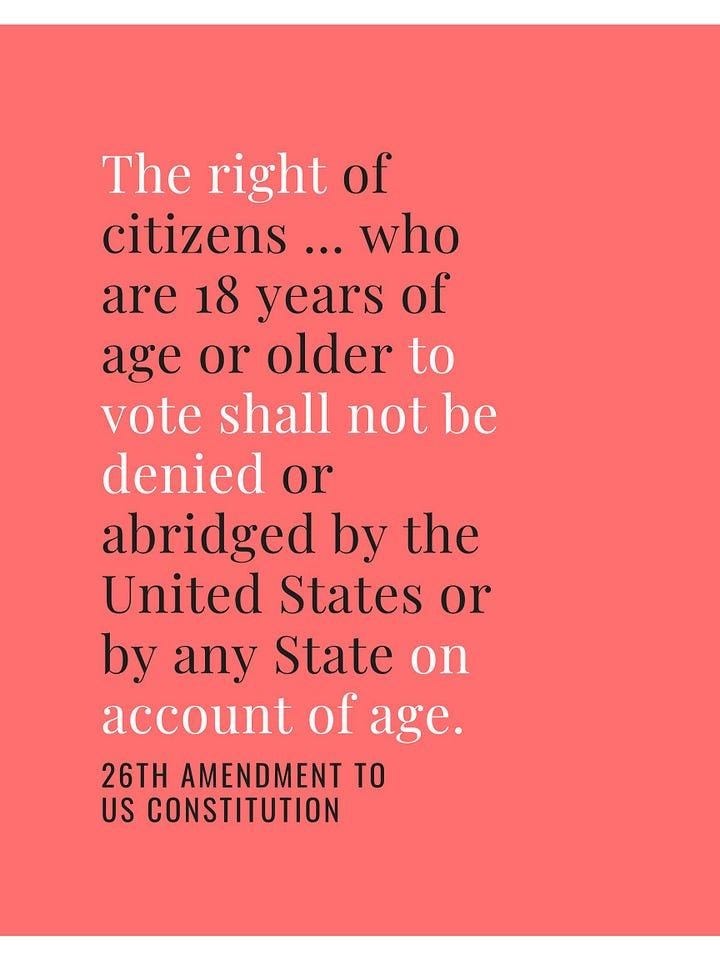
Many people know the 26th Amendment as the amendment that lowered the voting age to 18 on the heels of the mandatory draft during the Vietnam War. (I argue elsewhere that it was “an integral part of, and natural expansion of the Second Reconstruction.”) However, the amendment does much more than lower the voting age. The text - which mirrors the 15th amendment enfranchising Black men and the 19th amendment enfranchising women - gives voters protection from the denial or abridgment of the right to vote “on account of age.” This right has been recognized by the courts, although this is certainly an evolving body of law.
Age discrimination persists in U.S elections in violation of the 26th Amendment. This is not normal; internationally, the U.S. consistently has one of the largest gaps in voter turnout between younger and older voters of any nation.
The legislative history of the Twenty-Sixth Amendment explains its purpose: to eliminate “special burdens” experienced “on account of age.”
These special burdens appear at all phases of the election administration process, such as:
the lack of an on-campus polling site,
and the over-reliance and disproportionate rejection of provisional ballots cast by youth.
Simply put, we must more seriously consider and examine the impact of our electoral system “on account of age” to understand, monitor, and most importantly - respond - to serious gaps in election administration and voting rights.
The Constitution recognizes young people as a “protected class” of voters. This means they cannot be the target of voter suppression.
As the nation gathers to celebrate its 250th anniversary, we must recognize the distinct role that young people have always played as constitutional architects – from the American Founding, and through the First and Second Reconstructions. We also know that in times of deep political and physical violence, bundles of constitutional rights and new federal laws have been passed.
What once seemed impossible suddenly seemed not only possible, but inevitable.
In honor of the Twenty-Sixth Amendment, remember that The Future Is Unwritten. It will take all of us to take the pen, together, to protect and expand democracy.
Resources:
New book! Becker and Bromberg, Youth Voting Rights: Civil Rights, the Twenty-Sixth Amendment, and the Fight for American Democracy on College Campuses (De Gruyter, 2025). + Short videos of case studies and short lectures.
Free Documentary, The 26th Amendment: The Long Road to the Fastest Ratification. This free film features reflections by then-youth organizers, chiefs of staff, and key legislators. Hear directly from those who were “in the room where it happened.”
Youth Voting Rights Act, first introduced in July 2022 by Senator Elizabeth Warren and Representative Nikema Williams, with the support of late Representative John Lewis, is comprehensive legislation to enforce the Twenty-Sixth Amendment and expand youth access to voting. If passed and signed into law, the YVRA would expand voter registration services at public colleges and universities; allow young people in every state to pre-register to vote before turning 18; require institutions of higher education to have an on-campus polling place; guarantee that states accept student IDs to meet voter-identification requirements; create a grant program; and gather data on youth voter registration and election participation.
Jennifer Frost, Let Us Vote! Youth Voting Rights and the 26th Amendment (NYU Press, 2022). History Professor Jennifer Frost details how the political and social movements of the time brought together bipartisan groups to work tirelessly in pursuit of a lower voting age.
Yael Bromberg Esq., is a constitutional rights attorney and nationally leading expert of the Twenty-Sixth Amendment. She is Principal of Bromberg Law LLC, and teaches election law at a range of institutions, including American University Washington College of Law. She co-designed and teaches a national Youth Voting Rights course engaging Bard College, Prairie View A&M University, Tuskegee University, and North Carolina A&T University. Bromberg is a Senior Fellow with the Bard College Center for Civic Engagement, a Visiting Associate with Eagleton Institute of Politics, and an ongoing partner with the William Monroe Trotter Collaborative for Social Justice of Harvard Kennedy School. She is an architect of The Youth Voting Rights Act, and just published a new book, “Youth Voting Rights: Civil Rights, the Twenty-Sixth Amendment, and the Fight for American Democracy on College Campuses” (De Gruyter, 2026). Follow Yael on Twitter and LinkedIn: @YaelBromberg.